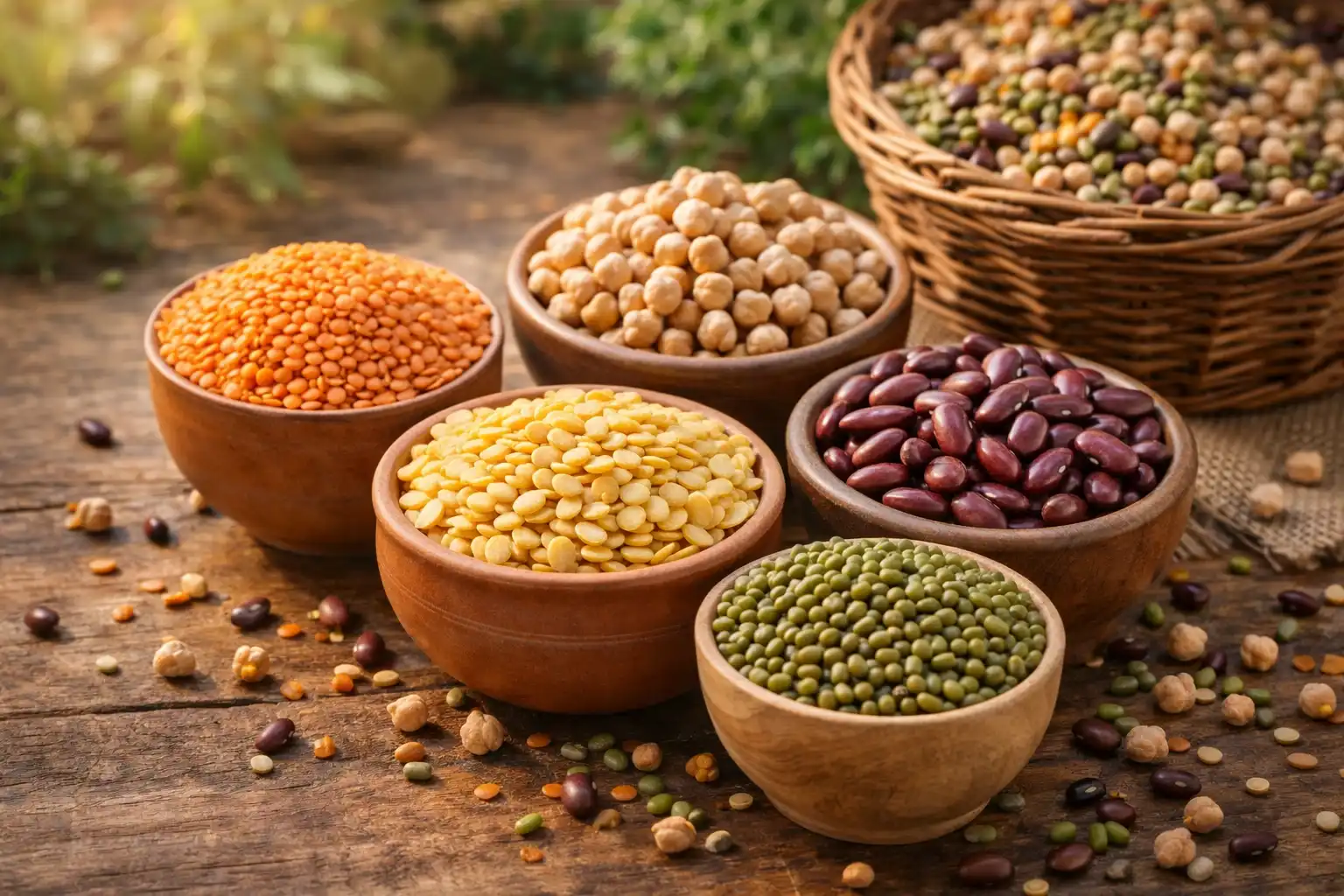
Pulses are edible seeds of leguminous plants such as lentils, chickpeas, beans, and peas. They are rich in protein, fiber, vitamins, and minerals, making them an essential part of a healthy diet. Pulses are affordable, nutritious, and widely consumed across the world.
Pulses belong to the legume family and are cultivated mainly for their dry seeds. They are one of the most important sources of plant-based protein, especially in countries like India, where a large population follows a vegetarian diet.
According to the Food and Agriculture Organization, pulses play a vital role in food security, nutrition, and sustainable agriculture.
Here are some widely consumed pulses:
Lentils (Dal) – Red, yellow, green, and brown varieties used in soups and curries.
Chickpeas (Chana) – Used for making chole, hummus, and snacks.
Green Gram (Moong Dal) – Light and easy to digest.
Black Gram (Urad Dal) – Used in dosa, idli, and dal makhani.
Kidney Beans (Rajma) – Popular in North Indian cuisine.
Peas (Matar) – Used in vegetables and snacks.
Pulses are packed with essential nutrients:
High-quality plant protein
Dietary fiber
Iron
Folate
Potassium
Magnesium
Low fat and cholesterol-free
They help improve digestion, maintain heart health, and control blood sugar levels.
Improve soil fertility through nitrogen fixation
Require less water compared to many other crops
Support sustainable farming practices
Enhance crop rotation systems
Daily meals (Dal, Chole, Rajma)
Snacks (Roasted chana, sprouts)
Flour (Besan for pakoras and sweets)
Protein supplements (Plant-based protein powders)