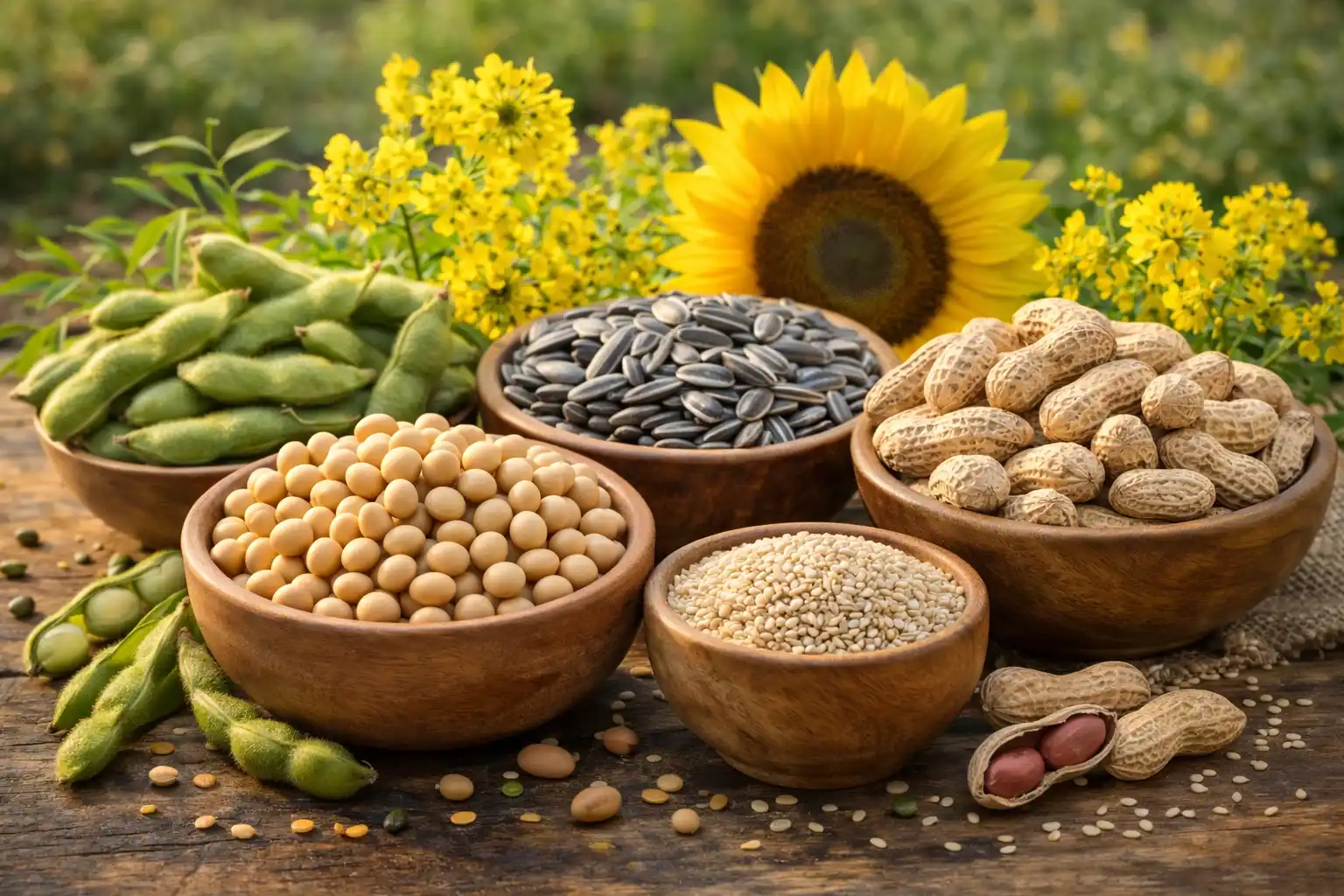
Oilseeds are crops grown primarily for extracting oil from their seeds. Major oilseeds include soybean, mustard, groundnut, sunflower, and sesame. They are an essential source of edible oils, protein-rich meals, and industrial raw materials, playing a crucial role in agriculture and the food industry.
Oilseeds are important commercial crops cultivated across the world. They provide vegetable oils used for cooking, food processing, cosmetics, and biofuels. In countries like India, oilseeds form a vital part of the agricultural economy and daily food consumption.
Here are the commonly grown oilseed crops:
Soybean – High in protein and oil content, widely used for edible oil and animal feed.
Mustard (Sarson) – Popular for mustard oil, especially in Indian cooking.
Groundnut (Peanut) – Used for oil extraction, snacks, and peanut butter.
Sunflower – Produces light and healthy cooking oil.
Sesame (Til) – Used for oil and traditional sweets.
Castor Seed – Used mainly for industrial oil production.
Oilseeds are rich in:
Healthy fats (unsaturated fatty acids)
Protein
Vitamin E
Omega-3 and Omega-6 fatty acids
Antioxidants
Soybean and groundnut are also excellent sources of plant-based protein.
Oilseeds are used for:
Edible cooking oils
Margarine and processed foods
Animal feed (oil cakes after extraction)
Cosmetics and skincare products
Biofuel production
Industrial lubricants
High market demand
Support rural livelihoods
Improve crop diversification
Provide export opportunities
Enhance soil fertility (in crop rotation systems)