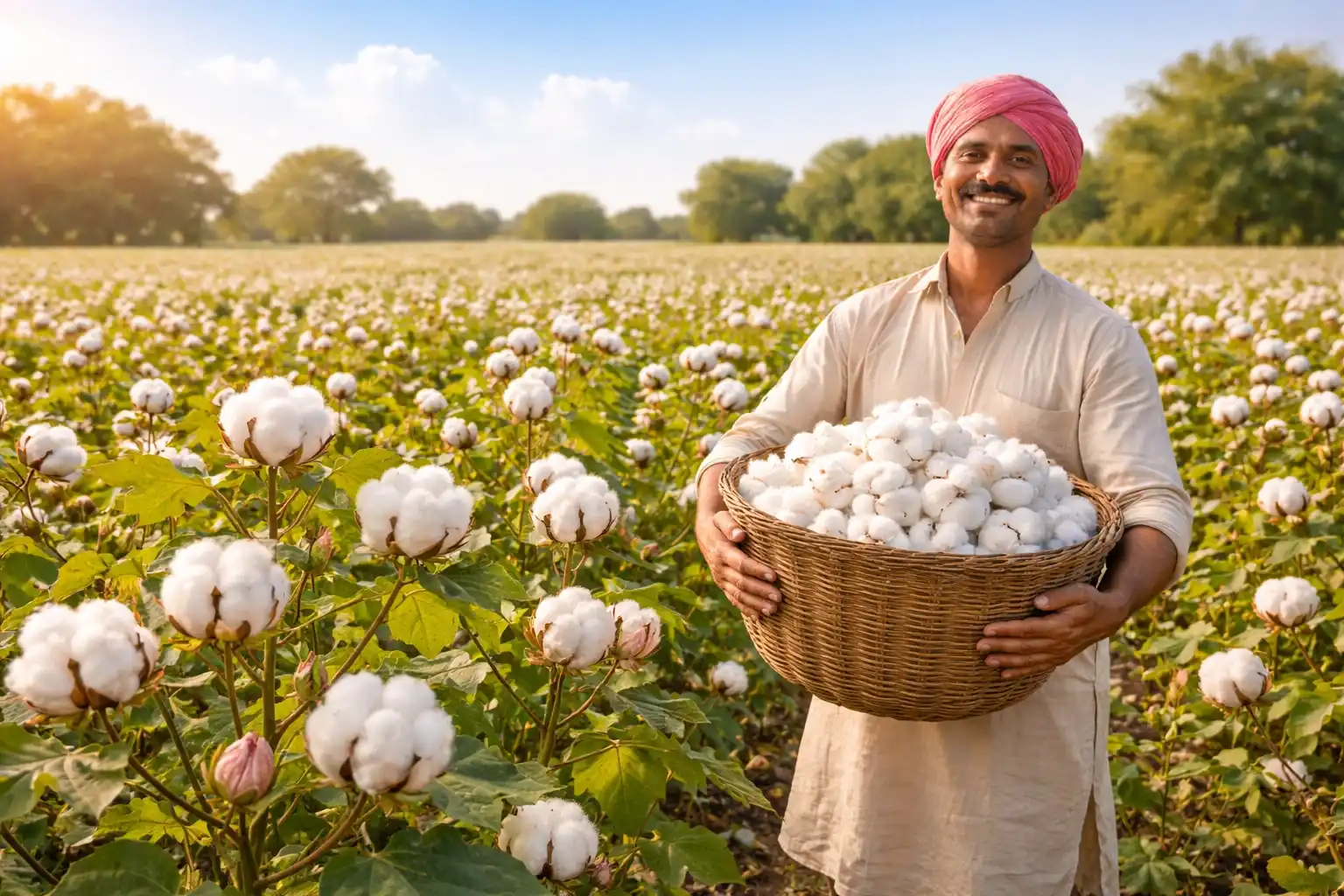
Cotton is a soft, fluffy natural fiber grown around the seeds of the cotton plant. It is one of the most important fiber crops in the world and is widely used in the textile industry for making clothes, fabrics, and other products. Cotton is often called “White Gold” because of its great economic value.
Cotton is a major cash crop grown in tropical and subtropical regions. It plays a crucial role in the textile industry and supports millions of farmers worldwide. Countries like India, China, United States, and Brazil are among the leading cotton producers globally.
There are mainly four types of cotton cultivated worldwide:
Upland Cotton – Most commonly grown variety.
Egyptian Cotton – Known for its long fibers and premium quality.
Pima Cotton – Extra-long staple cotton, very soft and strong.
Organic Cotton – Grown without synthetic fertilizers and pesticides.
Cotton requires:
Warm climate
Moderate rainfall
Black soil (especially in India)
Plenty of sunshine
In India, cotton is mainly grown in states like Gujarat, Maharashtra, Telangana, and Punjab.
Cotton is widely used for:
Clothing (shirts, sarees, jeans, t-shirts)
Bed sheets and towels
Medical supplies (bandages, cotton rolls)
Textile products
Industrial fabrics
It is breathable, soft, durable, and comfortable, making it one of the most preferred natural fibers.
Supports textile industries
Provides employment to farmers and workers
Contributes to exports
Boosts rural economy
Cotton is a key contributor to the agricultural and industrial sectors.